
How to Sync Intermittent Fasting with Your Cycle (Or Symptoms if You're Postmenopausal)
Quick Read: 6 minutes
What You'll Learn:
Why "just do 16:8 every day" doesn't work for women
The four seasons of your cycle (and how to fast in each one)
How to adapt this if you're postmenopausal
Here's what nobody tells you about intermittent fasting as a woman:
You're not supposed to fast the same way every single day.
I had a client—Emma—who was doing 16:8 fasting religiously. Every. Single. Day. No exceptions.
She felt amazing for two weeks of the month. The other two weeks? Exhausted, irritable, ravenous, ready to quit.
"What's wrong with me?" she asked. "Why can't I stick with it?"
Nothing was wrong with her. She was just fasting against her cycle.
Your hormones change dramatically throughout the month. Your energy shifts. Your metabolism fluctuates. Your stress resilience goes up and down.
And yet, most fasting advice treats you like you're a 25-year-old.
But here's the truth: Consistency for women doesn't mean doing the same thing every day. It means working WITH your hormonal rhythm, not against it.
Once Emma learned to sync her fasting with her cycle—longer fasts when her body could handle it, gentle or no fasts when she needed support—everything changed. More energy. Better results. No more white-knuckling.
This is called cycle syncing. And it's about to change everything for you too.
Your Cycle Has Four Seasons (Yes, Really)
Think about the four seasons of the year. You wouldn't wear a bikini in winter or a parka in summer, right?
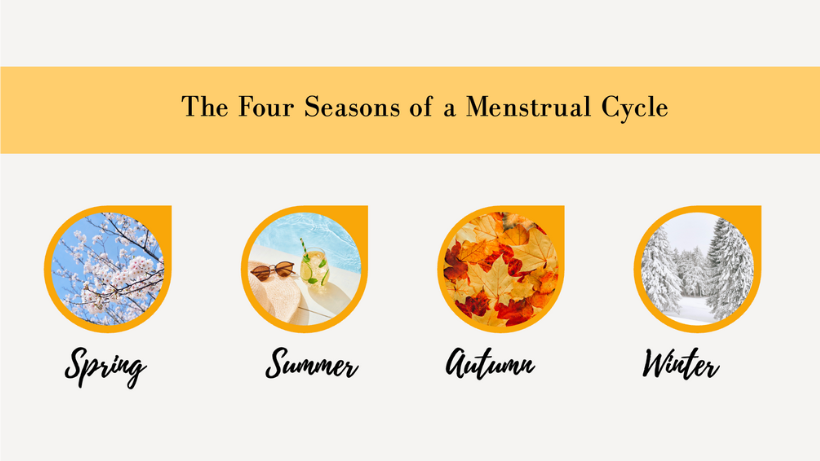
Your menstrual cycle works the same way. It has four distinct phases—four seasons—and each one requires a different approach to fasting, eating, and moving.
Here's the simple breakdown:
Winter = Your Period (Days 1-5)
Spring = Pre-Ovulation (Days 6-14)
Summer = Ovulation (Around Day 14)
Autumn = Pre-Menstrual/PMS (Days 15-28)
Different hormones dominate each phase. Your metabolism changes. Your energy shifts. And that means fasting needs to shift too.
Let me walk you through each season and what to do.

WINTER: Your Period (Days 1-5)
The Season of Rest
What's happening: Your hormones are at rock bottom. Your body is working hard, shedding your uterine lining. You're tired. Maybe crampy. Definitely not interested in pushing yourself.
How you'll feel: Low energy, introspective, wanting to hibernate with Netflix and a hot water bottle.
Should You Fast in Winter?
Days 1-2: No. Just don't. Your body is doing heavy work. Feed it. Support it. This is not the time to add stress.
Days 3-5: Maybe—keep it gentle. If you're feeling better by day 3, you can try a light fast (12:12 or 13:11). But if you're still exhausted? Eat breakfast. No guilt.
What to Eat
Focus on nourishing, warming foods that support your body:
Iron-rich foods (you're losing blood): red meat, spinach, lentils
Magnesium (soothes cramps): dark chocolate, pumpkin seeds
Warming meals: soups, stews, bone broth
And yes, that dark chocolate craving? Honor it. Your body knows what it needs.
How to Move
Gentle walks. Restorative yoga. Stretching. Or—here's a radical idea—rest.
This is not the time for HIIT or heavy lifting. Give yourself permission to slow down.
The Winter Mindset
Winter is your most intuitive phase. You see things clearly. You know what's not working in your life.
Use this time to journal, reflect, and release what's no longer serving you. Then rest.

SPRING: Pre-Ovulation (Days 6-14)
The Season of Energy and Possibility
What's happening: Estrogen is rising. Your energy is coming back. You're emerging from hibernation like a flower pushing through soil.
How you'll feel: Motivated, creative, social, ready to take on the world.
Should You Fast in Spring?
Absolutely. This is your fasting sweet spot.
Spring is when your body thrives on fasting. Your insulin sensitivity is excellent. Your energy is high. Your metabolism is primed.
This is the time to push your fasting window:
14:10 to 16:8 (or even 18:6 if it feels good)
Experiment with longer fasts
Your body can handle it—and will reward you with mental clarity and fat burning
What to Eat
Think fresh, light, vibrant:
Salads with lean protein
Fresh vegetables and fruits
Complex carbs (sweet potato, quinoa)
Cruciferous vegetables (broccoli, kale) to support your rising estrogen
Your liver is working hard to process hormones—support it with fiber and greens.
How to Move
This is your power phase.
Strength training. HIIT. Running. That workout class you've been curious about? Try it now.
Your muscles are primed for growth. Your energy is high. Use it.
The Spring Mindset
Spring is your creative, social, ambitious phase. This is the time to:
Start new projects
Have important conversations
Set goals
Say yes to social plans
You're magnetic right now. Lean into it.

SUMMER: Ovulation (Around Day 14)
The Season of Peak Power
What's happening: Estrogen peaks. You ovulate. You're at your hormonal high point—the top of the mountain.
How you'll feel: Confident, magnetic, energised, like you could conquer the world. Your libido is high. You feel attractive. Communication flows easily.
Should You Fast in Summer?
Yes, but ease back slightly.
Your body is at peak sensitivity. You're ovulating, which takes energy. Your body temperature rises.
Shorten your fasting window a bit:
14:10 or 15:9 instead of 16:8
Listen to your body—some women still thrive on 16:8, others need to pull back
Don't add extra stress when your body is already working hard
What to Eat
Focus on supporting your hormones at their peak:
Cruciferous vegetables (to help metabolise oestrogen)
Antioxidant-rich foods (berries, colourful veggies)
Healthy fats (avocado, nuts, olive oil)
How to Move
You're still strong, but be mindful. Your body temperature is elevated, so don't overheat.
Moderate to high-intensity workouts are great. Just stay hydrated and listen to your body.
The Summer Mindset
This is your power phase for communication and influence.
Ask for that raise. Have the difficult conversation. Present to the group. Negotiate.
You're at your most charismatic and persuasive right now. Use it.

AUTUMN: Pre-Menstrual (Days 15-28)
The Season of Slowing Down
What's happening: If you're not pregnant, your hormones start declining. Progesterone rises briefly, then drops. You begin turning inward.
How you'll feel:
Early autumn (Days 15-21): Still pretty good, calm, grounded
Late autumn (Days 22-28): Tired, irritable, emotional, craving comfort foods
This is when PMS shows up. And this is where most women get fasting completely wrong.
Should You Fast in Autumn?
Early autumn: Yes, but gently (14:10 or 15:9)
Late autumn (PMS week): STOP FASTING.
This is the most important thing I'll tell you: Don't fast during your PMS week.
Your progesterone is dropping. Your cortisol is rising. Your body is stressed.
Adding fasting—another form of stress—makes everything worse: anxiety, irritability, cravings, insomnia, mood swings.
Eat breakfast. Prioritise protein. Support your body instead of fighting it.
What to Eat
Blood sugar stability is everything right now:
Protein with every meal (stabilises blood sugar and mood)
Magnesium-rich foods (leafy greens, dark chocolate, pumpkin seeds)
Complex carbs (sweet potato, quinoa—don't fear carbs right now)
Omega-3s (salmon, walnuts—reduces inflammation)
And those chocolate and carb cravings? They're real. Your body needs more calories right now. Honor that—just choose quality sources.
How to Move
Gentle is the name of the game.
Walks. Yoga. Pilates. Stretching. Swimming.
This is NOT the time for HIIT or pushing through fatigue. That will spike your cortisol even more and make you feel worse.
The Autumn Mindset
Autumn makes you honest, direct, and boundary-setting.
Use this energy to:
Finish projects
Organise and declutter
Say no to what's draining you
Be honest about what's not working
Then prepare to rest.
The Simple Cycle-Syncing Strategy
Here's the cheat sheet:
Winter (Period): Don't fast or keep it gentle (12:12). Rest. Nourish.
Spring (Pre-Ovulation): Fast longer (14:10 to 16:8). Go hard in workouts. Start new things.
Summer (Ovulation): Pull back slightly (14:10 to 15:9). Stay strong but don't overheat.
Autumn (Pre-Menstrual): Early autumn = gentle fasting (14:10). Late autumn = STOP fasting. Eat breakfast. Be kind to yourself.
What If You're Postmenopausal?
If you haven't had a period in 12+ months, your hormones are stable now—no more cycling.
But that doesn't mean you should fast the same way every day.
Instead of syncing with your period, sync with your SYMPTOMS.
Track these daily:
Energy (1-10)
Sleep quality (1-10)
Stress level (1-10)
Then adjust:
Green Light Days (high energy, good sleep, low stress): Fast confidently (14:10 to 16:8)
Yellow Light Days (medium energy, okay sleep, moderate stress): Fast gently (12:12 to 14:10)
Red Light Days (low energy, poor sleep, high stress): Don't fast. Eat breakfast.
You're still cycling—just with your body's signals instead of a menstrual period.
The Bottom Line
Your body isn't a machine that operates the same way 365 days a year.
It's a beautiful cyclical. Seasonal. Rhythmic. Body.
If you're still cycling: Fast longer in spring. Pull back in summer. Stop in late autumn. Be gentle in winter.
If you're postmenopausal: Fast on your green light days. Go gentle on yellow light days. Don't fast on red light days.
The goal isn't to fast as much as possible. The goal is to fast in a way that supports your hormones, your energy, and your long-term health.
Because when you work WITH your body instead of against it?
That's when everything shifts.
Quick Answers to Your Burning Questions:
My cycle is irregular. Can I still do this?
Yes! Track your energy, mood, and hunger instead. You'll still notice patterns. Adjust your fasting based on how you FEEL, not just what day you're on.
Can I fast during my period if I feel good?
Absolutely. If you feel great on day 3-5 of your period, a gentle 12-14 hour fast is fine. Just listen to YOUR body.
I'm on the pill. Does this apply to me?
Hormonal birth control suppresses your natural cycle, so you won't experience these hormonal shifts. Use the symptom-based approach instead (track energy, sleep, stress).
How long until I notice a difference?
Most women see improvements within 2-3 cycles. Better energy, less PMS, easier fasting, improved body composition.
Put the mask on you first, use Intermittent Fasting strategically and thrive again!
Want more evidence-based menopause advice straight to your inbox?
Subscribe below and get my FREE Top Sleep Tips for Women in Menopause PDF.