
The Cortisol Connection: Why Your HIIT Obsession Might Be Backfiring
Quick Read: 6 minutes
What You'll Learn:
Why that 6am bootcamp might be sabotaging your weight loss (not helping it)
The cortisol-stress-belly fat connection nobody talks about
How to know if you're over-exercising (and why it matters after 40)
What hormone-friendly movement actually looks like
How to work OUT without stressing OUT your body

Proud of your workout schedule?
I have a girlfriend who is also a senior executive, mother and super proud of her workout schedule.
HIIT classes three times a week. Up at 5:30am for bootcamp. Burpees, sprints, heavy breathing, sweating buckets. She thought she was crushing it. She was a warrior. She was doing ALL THE THINGS.
She was also:
Exhausted. All. The. Time.
Unable to sleep despite being bone-tired
Carrying stubborn belly fat that wouldn't budge no matter how hard she worked
Constantly starving and craving sugar by 3pm
Snapping at her family over small things
Dealing with irregular periods that made no sense
But she kept showing up. Because more exercise = better results, right? She believed that if she just pushed harder, worked out more intensely, added another class...
Then I spoke to her about cortisol.
And everything clicked.
What Nobody Tells You About Exercise and Stress
Here's the thing: exercise IS stress. Good stress, usually. Productive stress. The kind that makes you stronger.
But your body doesn't know the difference between running from a tiger and doing burpees in a hot room at 6am. It just knows: STRESS. THREAT. SURVIVAL MODE.
And it responds by pumping out cortisol—your primary stress hormone.
Cortisol isn't the enemy. We need it. It helps us wake up in the morning, responds to actual threats, and yes, helps us power through workouts.
The problem? Most of us are swimming in it.
Work stress. Family stress. Financial stress. The general stress of being a woman navigating perimenopause while trying to hold life together. And then we add intense exercise on top of it all.
Our bodies can't tell where one stressor ends and another begins. It just knows the cortisol tap is stuck in the "on" position.

The Perimenopause Plot Twist
And here's where it gets really fun (sarcasm intended): after 40, our ability to handle stress—including exercise stress—tanks.
Oestrogen and progesterone, those helpful hormones that used to buffer stress and help us recover? They're declining. Which means our cortisol tolerance drops too.
The HIIT class that made you feel amazing at 32? At 45, it might be wrecking you.
When cortisol stays chronically elevated, here's what happens:
Your body stores fat around your middle. Cortisol literally signals your body to hold onto belly fat. You know, just in case this "threat" (your morning workout) means food is scarce and you need energy reserves.
Your sleep goes to hell. High cortisol at night keeps you stay wired when you should be winding down. Then you're exhausted but can't fall asleep. Or you fall asleep but wake at 3am, brain spinning.
Your metabolism slows down. Your body thinks you're in crisis mode. So it conserves energy. Burns fewer calories. Makes everything harder.
You're constantly hungry and craving sugar. Because your body thinks it needs quick energy to deal with all this "stress." Hello, 3pm biscuit tin raid.
Your mood tanks. Cortisol interferes with serotonin. You're irritable, anxious, or just flat. And you wonder why you can't "just be positive."
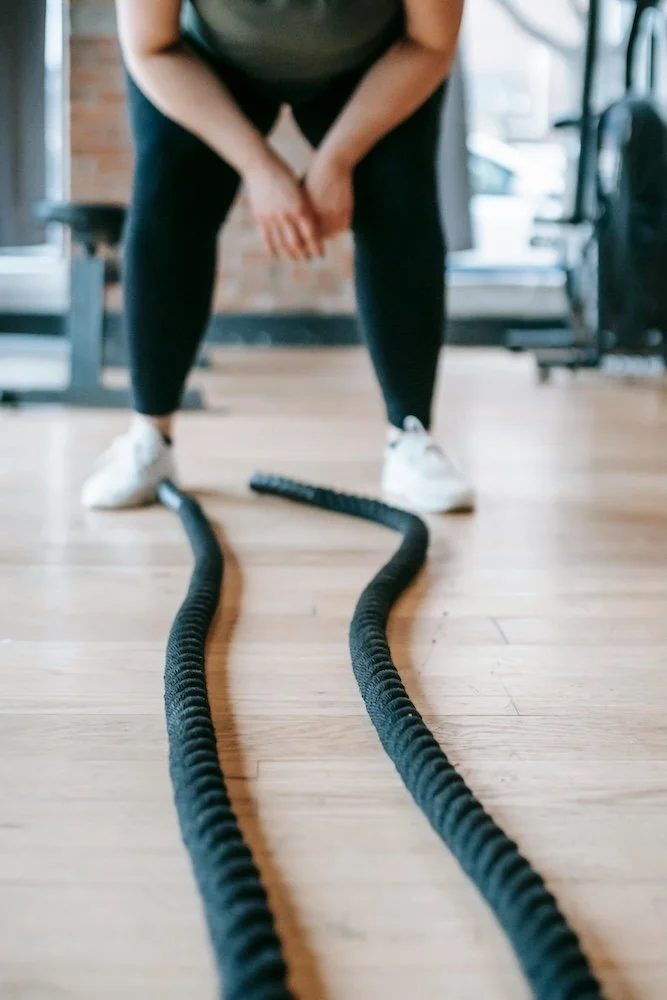
The Exercise Paradox
So here's the brutal irony: you're working out harder than ever, eating well, doing "all the right things"... and your body is actively working against you.
Not because you're doing something wrong. But because you're doing too much of something that's supposed to be good for you.
Your bootcamp instructor yelling "No pain, no gain!" doesn't understand perimenopause hormones. The fitness influencer posting her 6am HIIT workout isn't dealing with your stress load or your hormone fluctuation.
And the scale that won't budge? It's not a character flaw. It's biochemistry.
What Hormone-Friendly Movement Actually Looks Like
Deep breath. Because here's the good news: you don't have to stop moving. You just have to move smarter.
Strength training (done right). Moderate intensity resistance training is your friend. You're building muscle, protecting bones, boosting metabolism—without the cortisol spike of high-intensity cardio. Rest between sets. Don't rush. Let your heart rate come down.
Walking. The underrated hero. I know, I know. Walking feels too easy. Too boring. Not "workout" enough. But walking—especially outdoors—lowers cortisol, clears your head, burns calories, and doesn't stress your system. It's magic.
Yoga, Pilates, stretching. Movement that focuses on breath, control, and flexibility actually lowers cortisol while building strength. Revolutionary concept.
The 80/20 rule. If you LOVE intense workouts and don't want to give them up completely (I get it), try this: 80% of your movement should be moderate intensity. 20% can be higher intensity. One or maybe two HIIT sessions a week? Probably fine. Three to Five? You're drowning in cortisol.
Rest days are productive days. Your body doesn't get stronger during the workout. It gets stronger during recovery. Rest isn't lazy. It's strategic.

How to Structure Your Week
Here's what a hormone-friendly movement week might look like:
2-3 strength training sessions (20-30 minutes, moderate intensity, full rest between sets)
Daily walking (20-30 minutes, doesn't have to be power walking)
1-2 gentle movement sessions (yoga, Pilates, stretching)
1-2 complete rest days (or just walking)
Optional: 1 higher intensity session if you love it and you're sleeping well, managing stress, and not experiencing the warning signs
Notice what's NOT on that list? Five bootcamp classes. Daily HIIT. "Smashing" yourself every single day.
For me I do 20minutes of yoga daily, then I do between three to five strength sessions for 20mins. I then try and squeeze in a walk after lunch when I can. That really works for me. Experiment and figure out what might work for you.
Signs You Need to Dial It Back
Your body is trying to tell you something. Are you listening?
You can't lose weight despite working out hard consistently
You're constantly exhausted but struggle to sleep
Your period is MIA or all over the place
You're constantly hungry or battling sugar cravings
You have injuries that won't heal or keep coming back
You feel "wired and tired" at the same time
You're irritable, anxious, or your mood is all over the place
You dread your workouts instead of enjoying them
If you're nodding along to more than a couple of these? It's time to reassess.
The Bottom Line
I know this is hard to hear. Especially if you've been conditioned to believe that harder is always better, that rest is lazy, that "no pain, no gain" is gospel.
But your body at 45 isn't the same as your body at 25. And that's not a failing. It's just biology.
Working smarter instead of harder isn't giving up. It's finally working WITH your body instead of against it.
Ready to train in a way that actually supports your hormones? My free Strength Training Starter Guide shows you how to build strength without spiking cortisol—gentle on your hormones, effective for building muscle and protecting bones. [Download it here] and start moving in a way that makes you stronger, not more stressed.
Because the goal isn't to punish your body into submission.
It's to build a body that can carry you—energised, capable, and resilient—through the next 40 years.
And sometimes that means having the courage to do less.
Quick Answers to Your Burning Questions:
Q: Does this mean I should never do HIIT again? A: Not necessarily. If you're sleeping well, managing stress, and not experiencing the warning signs, occasional HIIT is probably fine. But "occasional" means 1-2 times per week max, not daily. And if you're in the thick of perimenopause symptoms, you might need to take a break until your body stabilises.
Q: What if I LOVE my bootcamp class and my friends are there? A: I get it—the community matters. Could you go but modify the intensity? Take more breaks? Skip some of the jump-heavy moves? Or could you reduce frequency—maybe twice a week instead of five? You don't have to choose between your social life and your hormones, but you might need to adjust how you participate.
Q: How do I know if my cortisol is actually too high? A: You can get tested (saliva tests throughout the day are most accurate), but honestly, your symptoms tell you most of what you need to know. The combination of exhaustion + sleep problems + belly fat + sugar cravings + mood issues is a pretty clear signal. Trust what your body is telling you.
Q: Can I still lose weight without intense exercise? A: Absolutely. In fact, you might find it EASIER once you stop chronically spiking cortisol. Moderate strength training + walking + stress management + proper nutrition is incredibly effective. Sometimes doing less gets you better results.
Q: What's the best time of day to work out for hormones? A: Generally, late morning or early afternoon is ideal—cortisol is naturally higher in the morning, so adding intense exercise then can be extra stressful. But honestly, the best time is whenever you'll actually do it consistently. Just maybe avoid intense workouts late in the evening if sleep is an issue.
Q: How long does it take to recover from over-exercising? A: It varies, but most women notice improvements in energy and sleep within 2-4 weeks of dialling back intensity. Hormonal regulation can take 2-3 months. Weight loss (if that's a goal) might take a bit longer as your metabolism recalibrates. Be patient. You didn't get here overnight; you won't fix it overnight either.
Put the mask on you first, exercise smarter and thrive again!
Want more evidence-based perimenopause and menopause advice straight to your inbox?
Subscribe below and get my FREE Top Sleep Tips for Women in Menopause PDF.